Chronicles of the Residuum: A Decade-Long Journey Through Sound, Story, and the Unexplained.
Updated: Jan 16

Crafting a Universe, One Limitation at a Time
In a world of instant singles and algorithm-driven playlists, "Chronicles of the Residuum" emerges as a rare, immersive concept album—a project that took over a decade to realize.
I caught up with its creator, Rob Ratcliffe, who hasn’t just composed music; he built a universe, drawing on personal experience, literary influences, and even the supernatural. “It was called the Neverending Album for a long time. There were many, many times when I wanted to give up, and I nearly gave up, just because there were so many obstacles,” Rob reflects.
The Creative Process: From Visual Art to Sonic Storytelling
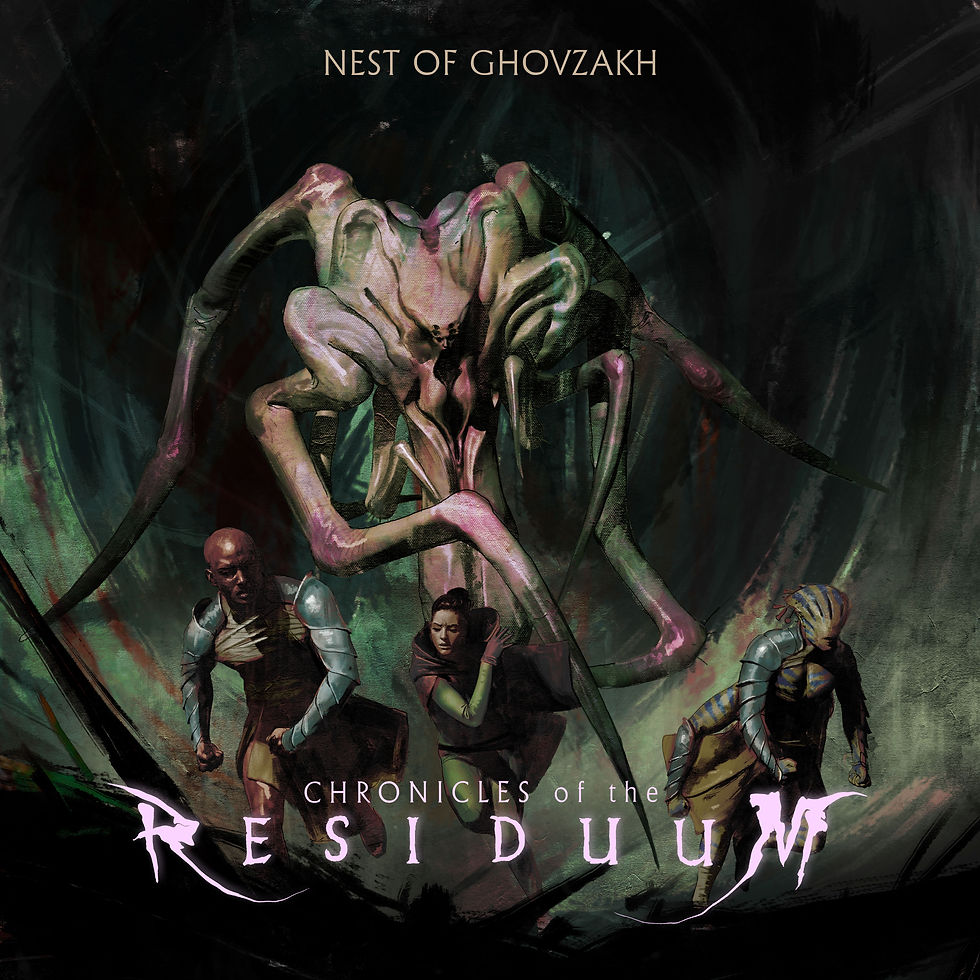
Rob’s creative journey began with pen and ink drawings, not a script. “I actually started Chronicles of the Residuum with visual ideas and some original pen and ink drawings. I have a background in art, and I planned to be an illustrator until about the age of 17 when I decided to go down the musical path. So I got these visual ideas initially and then I went on to compose the music after that. So yeah, I did the music before writing the story or coming up with the characters,” he explains.
The emotional core of the story—centered on the characters Anku and Unagu—emerged later, inspired by Rob’s experience of becoming a parent. “Those anxieties and emotions fed into the story and that's when things took on a deeper resonance. Anku and Unagu are the main characters in the story. So it's this idea of a guardian and a child trying to survive in a collapsing world and those feelings all came from being a parent,” he shares.
Embracing Limitations: The Power of Constraints

The album’s sound was shaped as much by technical limitations as by artistic vision. Working on a 12-year-old laptop with only four gigabytes of RAM, Rob was forced to break tracks into sections and stitch them together. “The limitations definitely shape things. I've always preferred to work with one piece of equipment, whether that's a workstation, a groove box or a computer. So I made the decision quite early on to do everything exclusively in the laptop, which was also important because of the sort of sound world that I was imagining for the residuum,” he says. “Having certain limitations to narrow things down can actually be very useful. And there are lots of examples where artists have been limited by the equipment and the setup that they're working with, but that's been really inspiring at the same time and they've produced lots of fantastic music from it”.
Literary and Musical Influences: Building a World
Rob’s influences are as layered as his music. “The main ones would be stuff that I read growing up, so Tolkien, Lord of the Rings, The Hobbit and some of his other stuff. So you've got the fantasy elements, epic fantasy. Alan Garner is another, his writing has a beautiful poetic quality to it. And I've always enjoyed the way that he describes the fantastical and these transitions that he has from the real world to other realms,” he recalls. Science fiction author Gene Wolfe and the world-building of Frank Herbert’s "Dune" also left their mark.
Musically, Rob’s approach is one of hybridity. “I studied for a PhD in composition, which looked at musical hybridity and combining techniques and styles from different worlds. And, you know, that was an important thing for Chronicles of The Residuum as well. But even though I studied it academically, it's always been quite an organic thing for me, just letting the influences filter through me naturally,” he says.
Collaboration: Bringing the Residuum to Life
The album’s unique identity is the result of collaboration with experts in sound, language, and art. “The collaborative aspect is really important. David Donaldson, was the mixing and mastering engineer for the project. The way that he was able to integrate the music and the narration was really crucial,” Rob notes. “David and Jessie Peterson… created constructed languages for the project. They've worked on all kinds of TV shows and films and they're really incredible at what they do. They created seven language sketches for the residuum. And a language sketch is like the basis of a full language. So it gives you the sound of the language and certain names and phrases. And this brought a real authenticity and realism to it”.
The Haunted House: When Art and the Unexplained Collide
One of the most fascinating stories Rob shared was how a supernatural experience influenced the album’s sound design. “ Escape from Port Fallen was the last track that was created for the album… I decided to try a different approach and I went to my acoustic piano downstairs to see what I could come up with. And I'm playing around and I come up with this chord progression. And this is where things get a bit strange because as I come up with these chords, I started to hear this bell ringing from the other room downstairs. And I went and looked, and it was the bell on my daughter's bike. It must have rang about four or five times. Now the bike hadn't fallen over. There was nothing near to it. Nothing had hit the bike. I've got no explanation for it, but I took it as a bit of a sign that I'd hit on the right idea. So I went straight back to the laptop, played the chords in, found the sound that worked with it, and then all the other elements quickly fell into place around it. So it's one of those strange moments where art and the unexplainable cross paths,” Rob recounts.
This wasn’t his only brush with the unexplained. “My wife and I lived in a haunted house for a couple of years. We never saw anything, but we used to hear lots of unexplained noises, things being dragged across the floor, banging sounds, metallic type sounds and usually when you hear a sound there's some sort of spatial information with it so you can tell what direction it's coming from. The sounds in this house didn't have any directional information from them, so it was almost like they were bleeding through from another time and place, which was unnerving, but it was really fascinating, especially for somebody that's so into sound. And that experience directly influenced and inspired one of the tracks on the album, The Fog. And in this track, Anku enters this liminal zone, the Place Between Worlds where the past and the future intersect. So what I actually did with the sound design was built fragments in from other tracks on the album that are like subtly hidden in there. So you've got things that came before and some things that are still to come further down the line in the album. So it's like time is folding in on itself. But that idea came all from that experience of hearing those phantom sounds in the Haunted House,” he explains.

Perseverance and Hope: The Heart of the Residuum
Despite the challenges, Rob’s message is one of hope and resilience. “One of the things is hope. So it's a quest adventure, but there's is a lot of hope built into it. And also, in terms of the experience of creating a project of this scale, I hope it inspires people to, you know, follow their dreams and create what it is they want to create and not to give up when things become difficult and to keep pushing through,” he says.
Conclusion: The Journey Continues
"Chronicles of the Residuum" is more than an album—it’s a living, evolving universe, shaped by art, music, literature, collaboration, and even the unexplained. As Rob puts it, “We'll just have to see where the story takes us, I think”.
Chronicles of The Residuum is available now. For more details on the latest from Rob Ratcliffe. Click the below links to stay connected!

Article By Steve Harrison