In Conversation with Ballet’s Nina Ananiashvili

One London season will see hundreds of pairs of pointe shoes worn through by ballet dancers looking to perfect Nina Ananiashvili’s spin on the classic Swan Lake. Regular shoes may be worn through as well - as stage technicians, wardrobe teams, lighting specialists and various other theatre professionals work together with Ananiashvili’s State Ballet of Georgia to bring a fresh and exciting show to audiences seated in the opulent London Coliseum.
Ahead of a run of performances starting on July 17th, we wanted to hear from the former Bolshoi ballerina turned artistic director.
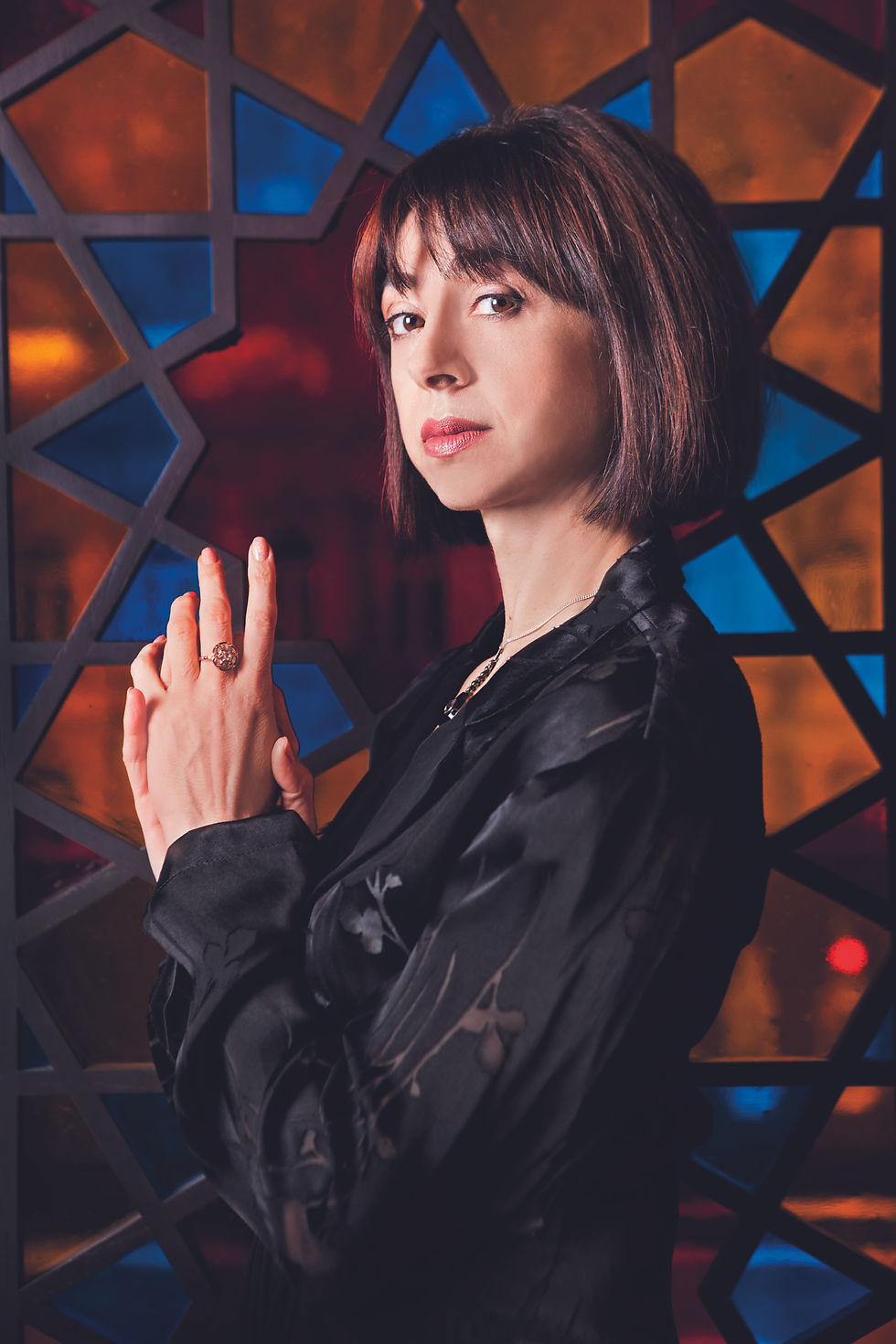
So the company is performing Swan Lake at the London Coliseum. What are your thoughts leading up to this run of shows?
London is one of the most important theatre capitals in the world. Coming here is, quite frankly, a milestone in the history of a company or in the career of an individual artist, whether a ballet dancer, opera singer, or actor. Two years ago, we had very successful performances at the London Coliseum, and this time the responsibility is even greater. We want to build on the success of our previous visit and not disappoint London audiences.
You've been Artistic Director of the State Ballet of Georgia since 2004. What are some highlights from the past twenty-something years in that role?
First of all, I would mention the qualitative leap we've made since 2004, thanks to the vast repertoire of the Company, which now exceeds 100 ballets. Masterpieces by M. Petipa, A. Bournonville, G. Balanchine, F. Ashton, J. Kylian, A. Ratmansky, and Y. Possokhov-to name just a few of the great masters of the past and present-have completely changed the face of the Company. Then there are the dancers. More than 80 percent of the Company are graduates of the Georgian State Ballet School.
In my humble opinion, they are well trained, coherent in style, able to perform ballets of very different techniques and spirit, well educated, and interested not only in classical ballet but also in opera and drama. I must also praise the international component of the Company—Ukrainian, Italian, Japanese, Brazilian, Spanish, American, and Korean dancers—who bring entirely different colors to our palette. Our international exposure should also be mentioned. We are increasingly sought after, and this is the reward for our hard and tireless work. Finally, I would say that discipline and having the right people in the right places are the keys to success.

What was your experience as a Bolshoi ballerina? Has this impacted your artistic direction?
I was, am, and always will be a Bolshoi ballerina. Everything I know professionally was taught to me there. My teachers—Natalia Zolotova, Raisa Struchkova, Marina Semyonova, Rimma Karelskaya, and Nikolai Fadeechev-gave me fundamentals that are priceless. I'm speaking about 250 years of tradition passed from teacher to pupil in its most quintessential form. But my horizons were expanded by ABT, the Royal Ballet, NYCB, the Royal Danish Ballet, and other great companies. Without Kenneth MacMillan, Peter Martins, Henning Kronstam, Ben Stevenson, and Frank Andersen, I wouldn't be who I am today.
You've performed in theatres across many countries. Is there anything unique about English crowds that you notice or try to play into?
English audiences? Knowledgeable, often reserved until the end of a performance, observant, yet deeply dedicated and loving. They come to the theatre to appreciate not only pyrotechnics but also a dancer's ability to live a role and to convey a theatrical message through music and steps. Five hundred years of theatre tradition-what more could one ask for?
You once received a 26-minute ovation. Does anything match that feeling?
A 47-minute ovation at my ABT farewell in 2009! I'm joking-though it's true. Yes, there are memories that are even more important. I remember the ovation after Symphony in C with NYCB in 1988 at the State Theater in New York, and after Kenneth MacMillan's The Prince of the Pagodas and F. Ashton's Cinderella with the Royal Ballet in 1990 and 1992. Happiness is when a ballerina, her partner, the company, and the audience all come together as one, isn't it?

Do you have any personal connections to Swan Lake?
My first full-length Swan Lake with the Bolshoi in Hamburg in 1982, when I was nineteen years old; my first guest performances with many companies; my first performance with my second home company, ABT, in 1993 with Julio Bocca; my last performances with the Bolshoi in 2004 with Sergei Filin, and with ABT in 2009 with Ángel Corella and Marcelo Gomes; my first full-length production for the State Ballet of Georgia... Sometimes I want to tell Swan Lake to go away, but apparently she still has some unfinished scores with me.
How have you brought the Georgian spirit into this production?
I might be mistaken, but I believe the respect for tradition is the most Georgian aspect of this production. And also its psychophysics. Georgians, Russians, English, Americans—you name them—they all move differently within the classical vocabulary.
What emotions do you hope people feel while watching?
Love, forgiveness, and hope.
Is there anything else you'd like to add?
Thank you!" to life, for allowing me to feel the same excitement today as I did 53 years ago when I first touched the ballet barre.
The State Ballet of Georgia will be performing their rendition of Swan Lake at the revered London Coliseum from July 17th to 26th. Tickets are on sale now but selling fast, starting at £25.

Article By Shona Kelly


